
29TH JUNE 2022
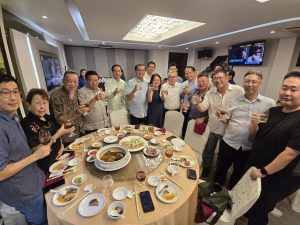
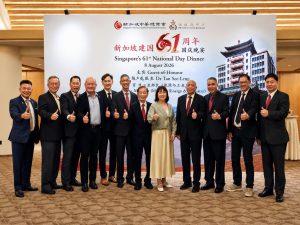
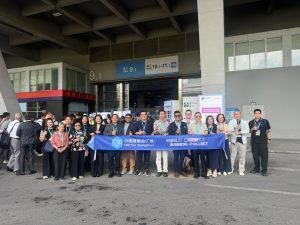
中资企业(新加坡)协会为推动中国与新加坡在绿色建筑材料和绿色建造领域的交流与合作,携手拓展东南亚第三方市场合作新机遇,特邀请会员于 2022 年 6 月 29 日参与中国-新加坡绿色建筑材料与绿色建造合作企业交流会。会长黄世荣也受邀在交流会上发表演讲。
新加坡建筑材料商公会会长黄世荣,于29/06/2022中资企业(新加坡)协会主办的“中国与新加坡绿色建筑材料和绿色建造的交流与合作”研讨会上发表的演讲讲稿。
《新加坡的绿色建筑发展》
新加坡自2005年至2022年(17年)大力推动绿色建筑发展,并拟订一系列发展蓝图。这里只作简要介绍,希望大家有些粗浅概念,从中探索新加坡和中国彼此在建设和发展绿色建筑的进程中,取得合作和发展的商机。
新加坡是位于热带的发达国家,和其他热带国家相比,这里人民生活水平更高。因此,资源消耗量更大,恐怕没有哪个国家像新加坡一年到头开空调吧?
Singapore is in great demand for resources and relies heavily on imported resources such as water, electricity, and gas. Electricity comes from three main sources: Firstly, waste incineration (5 percent). Secondly, natural gas imports from other countries, and lastly, electricity imports from Malaysia. Only 5 percent of the electricity generated from waste is owned by oneself. Besides collecting some fresh water, Singapore’s water supply is completely constrained by Malaysia. If Malaysia does not provide water, or if the weather is dry and there is a shortage of water, Singapore can only suffer.
Hence, in terms of resources, the Singapore Government has always attached great importance to raising revenue and cutting expenditure. Founding Prime Minister (PM) Lee Kuan Yew once said, “On the day Singapore separated from Malaysia, we knew that the other party would put pressure on water supply, so we had to systematically use every drop of rain that fell from the sky.”
Buildings in Singapore account for 40 percent of the country’s total electricity consumption and more than 20 percent of greenhouse gas emissions. This high electricity consumption has enabled the Government to actively improve energy efficiency in buildings. From 2005, the BCA released the “Green Building Certification Scheme”, setting the 2030 “80-80-80” target:
- 80%建筑达到绿色建筑标准
- 80% of new buildings meet the “ultra-low energy consumption” requirement.
- 所有建筑物取得”能源效益“80%提升。
Green buildings are not just about planting flowers and plants, BCA’s five key indicators are energy efficiency, water conservation, environmental protection, indoor environmental quality, and green features and innovation.
Progress Milestones for Green Buildings in Singapore:
2005 – Launch of BCA Green Mark Certification Scheme in Singapore
2006 – Launch of the First Green Building Masterplan
2007 – Launch of Sustainable Construction Masterplan
2008 – Amendments to Building Control Act to enforce minimum environmental standards for new buildings
2009 – Building and Construction Authority Zero-Energy Building was launched as a model for the Second Green Building Masterplan
2012 – Achieved the goal of 1000th Green Mark Project and 100th Platinum Award Project. Revision of the Control Act of Parliament / Introduction of minimum environmental sustainability standards requirements for existing buildings / Submission of energy consumption and related data by utilities and construction companies / Periodic review of air-conditioning system efficiency.
2014 – The 3rd Green Building Masterplan was launched As the number of green buildings advanced from 17 in 2005 to 2,100 in 2014 (62 million m2, equivalent to 25% of total building area).
3大策略性目标:
- 继续领跑绿色建筑
- Expand collaborations & participation
- 实践可持续的表现
2017 – Conducted a mid-term review of the 3rd Green Building Masterplan
Achievements and targets of the Singapore Green Building Masterplan: 2005 (0.1%), 2010 (13%), 2020 (43%), 2030 (80%).
Singapore is a leader in green building development in ASEAN and Asia, and is the first green building rating system designed specifically for tropical climates, gaining international recognition and accolades.
尽管如此,新加坡距离80%绿色建筑的目标还有一段长路要走,绿色建筑对绿色建材的大量需求,包括建筑结构原料,内外装饰材料,冷气,照明,采光以及绿色建筑的创新方案等等,这将为本国和中资企业提供绝佳商机。
With a population of 5.6 million and a land area of 720 square kilometres, Singapore is a major financial and port hub in the world. With its excellent geographical location and political stability, it is still the largest investor country in China. Apart from the Singapore market, we hope that Chinese enterprises will work with Singapore to open a third-party market. Both sides complement each other in terms of resources, capital, technology and management, and tap on ASEAN’s huge market to achieve the goal.
 简体中文
简体中文  English